











Vitamin C Serum: Morning or Night? When Should You Apply It?

You bought a vitamin C serum. Now you stand at the sink and wonder: should you use it now, or save it for tonight?
Here is the short answer to the Vitamin C Serum morning or night question. Use it in the morning if you can, and put sunscreen on top. Night use also works, so do not worry if evenings suit you better. The best time is the time you will actually use it every day.
This guide explains why, step by step. It also covers sun sensitivity, retinol, storage in hot weather, and the right order for your products. For the full ingredient basics, read our complete Vitamin C guide.
Vitamin C Serum Morning or Night: The Short Answer
-
Morning is the best default. Vitamin C is an antioxidant, so it protects your skin during the day, when sun and pollution hit it hardest.
-
Night is fine too. It suits people who use retinol in the morning or who find the morning routine too rushed.
-
Both is possible. Some people use it twice a day. Start with once a day and add a second time only if your skin stays calm.
-
Sunscreen is not optional. Vitamin C never replaces it. You will see why below.
Why Morning Is the Best Default
Your skin faces most of its damage in daylight. Sun exposure and pollution create free radicals, which are unstable molecules that harm skin cells. The Linus Pauling Institute at Oregon State University explains that vitamin C is a water soluble antioxidant found in high amounts in the skin, and that its levels fall with age and with exposure to UV light and pollutants. You can read their summary on vitamin C and skin health.
Applying vitamin C in the morning puts that antioxidant on your skin before the day's UV exposure begins. Harvard Health says vitamin C may help protect skin from ultraviolet rays when you use it with a broad spectrum sunscreen. It also notes that vitamin C does not replace sunscreen or sun protective clothing. See the full explanation in Harvard Health's article on topical vitamin C.
Think of it as a team. Sunscreen blocks and absorbs UV rays. Vitamin C helps your skin handle the damage from the rays that still get through. The Linus Pauling Institute states clearly that topical vitamin C does not absorb UVA or UVB light, so it cannot do the sunscreen's job.
This matters in Pakistan. Many of us spend long hours outdoors, commuting by bike or rickshaw, walking to work, or standing in the strong summer sun. Daytime antioxidant protection is most useful on those days.
Can Vitamin C Be Used at Night?
Yes. No rule says vitamin C stops working after sunset. Dermatologists often prefer morning use because of the sunscreen link, but night use is safe for most people.
Night use makes sense in these cases:
-
You use retinol at night. Houston Methodist says you can use both vitamin C and retinol. Their advice is to use vitamin C in the daytime to help protect against the sun, and retinol at night. Read their guidance in Vitamin C Serums: Are They Worth the Hype?
-
Your morning is rushed. A serum you use at night beats a serum you skip at 7 AM.
-
Your skin feels sensitive in the morning heat. Start at night while your skin gets used to the product, then move it to the morning later.
An honest note: we did not find a clinical trial that directly compares morning use against night use for results. The advice for mornings rests on how vitamin C works (antioxidant, daytime exposure) and on dermatologist guidance, not on a head to head test. So consistency matters more than the exact hour.
If you want to understand how vitamin C serum works on your skin and the benefits it offers, read our guide on what vitamin C serum does for your skin.
Does Vitamin C Make Skin Sun Sensitive?
This is a prevalent concern, and the response is comforting. Vitamin C is not known to make skin burn more easily. The warning about sun sensitivity belongs to other ingredients, such as alpha hydroxy acids (AHAs) like glycolic acid. Typology's explainer on whether vitamin C is photosensitizing makes the same point: vitamin C acts as a protective antioxidant, not a sensitizer.
Two cautions still apply:
-
Vitamin C is not a sunscreen, so your skin still needs SPF every day.
-
If your routine also has AHAs or retinol, those products may raise sun sensitivity. Sunscreen covers you in that case too.
The American Academy of Dermatology recommends a sunscreen with SPF 30 or higher and broad spectrum coverage, and advises you to reapply every two hours and right after swimming or sweating. Their guide is here: how to apply sunscreen.
Does Time of Day Change How Vitamin C Oxidizes?
Oxidation means vitamin C reacts with air, heat, or light and loses its power. The time you apply it does not change this. What matters is how you store it.
The Linus Pauling Institute notes that air, heat, and light can slowly break down vitamin C, and that ascorbic acid, the most effective form, is the least stable in solution. DermNet adds that the common form is highly unstable when exposed to oxygen.
Use these habits to protect your serum:
-
Choose a dark or tinted bottle. Houston Methodist recommends dark packaging and prefers a pump over a dropper, because the product stays away from air and light.
-
Close the cap tightly after every use.
-
Keep it in a cool, dry drawer. In a hot Pakistani summer, a humid bathroom shelf or a bag left in the car can spoil a serum quickly, because heat speeds up the breakdown.
-
Watch the colour. If a clear or pale yellow serum turns dark orange or brown, it has likely oxidized, and you should replace it.
Step by Step Order: Where Vitamin C Fits in Your Routine
Order matters because products work best when each layer can absorb. A simple rule from dermatologists: apply products from the thinnest texture to the thickest. Wait about 60 to 90 seconds between layers.
|
Step |
Product Type |
Purpose |
AM or PM |
|
1 |
Remove oil, sweat, and dirt |
AM and PM |
|
|
2 |
Antioxidant protection, brighter tone |
AM (or PM) |
|
|
3 |
Lock in hydration, support the skin barrier |
AM and PM |
|
|
4 |
Block UV rays |
AM only (reapply outdoors) |
|
|
5 |
Retinol 0.5% Serum or night treatment |
Renew skin texture |
PM only |

Cleanse
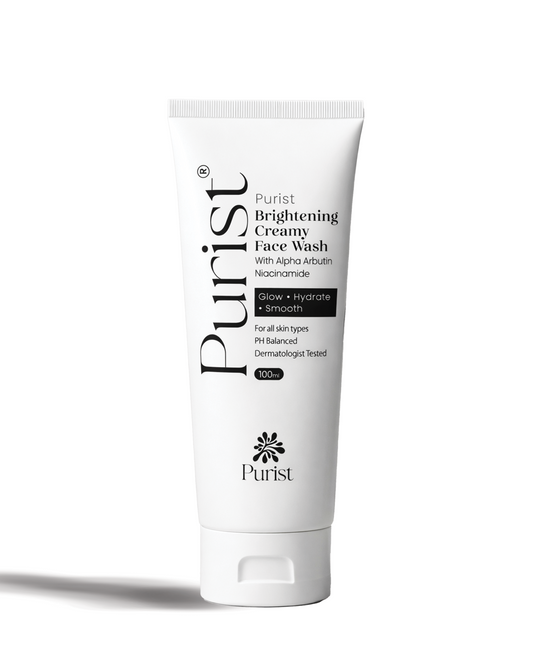
Wash with a gentle cleanser and pat your face nearly dry. Our Purist Vitamin C Glow Cleanser fits well at this step in the morning.
Treat (Serums and Actives)
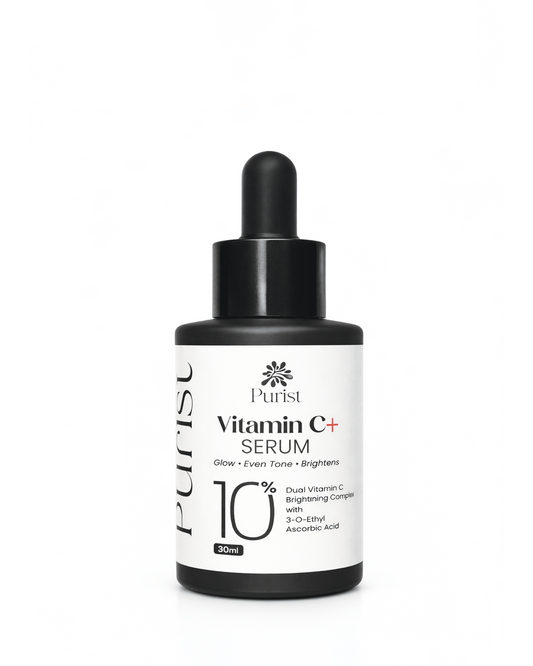
Apply 3 to 5 drops of Vitamin C+ Brightening Serum to clean skin. A thin layer is enough. More does not mean better results, and it raises the chance of stinging.
Moisturize
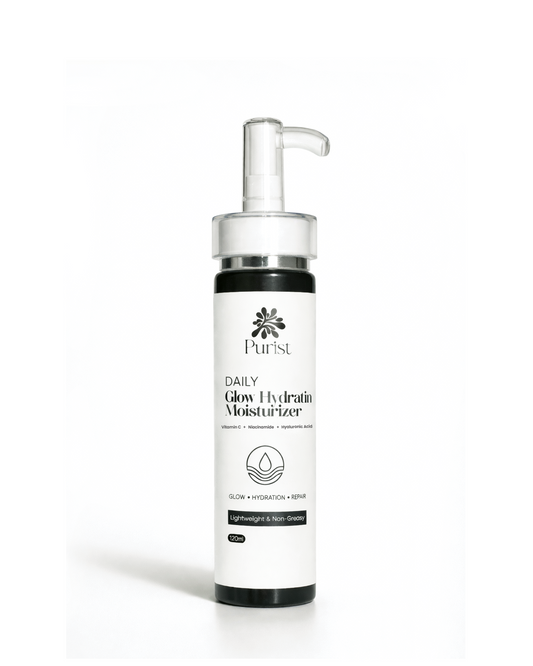
Seal the serum with a Hydrating Moisturizer. This keeps skin comfortable and helps reduce irritation.
Protect (SPF)
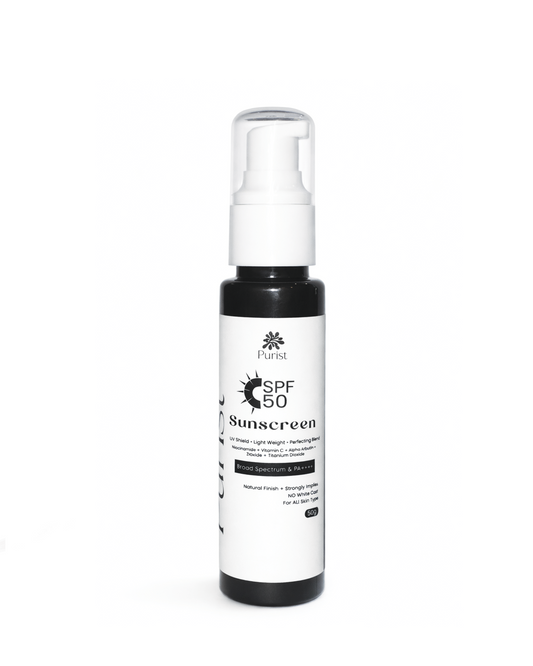
In the morning, finish with sunscreen. Sunscreen SPF 50 always goes last, after your moisturizer.
Where Each Active Fits In
-
Vitamin C and retinol: Vitamin C in the morning, retinol at night. This keeps both products working without crowding your skin.
-
Vitamin C and niacinamide: You can use them together in the same routine. For more on how they pair, read our niacinamide guide.
-
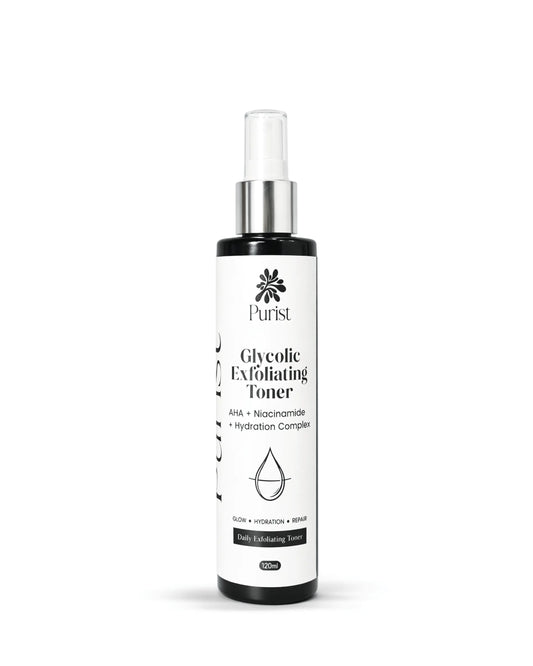
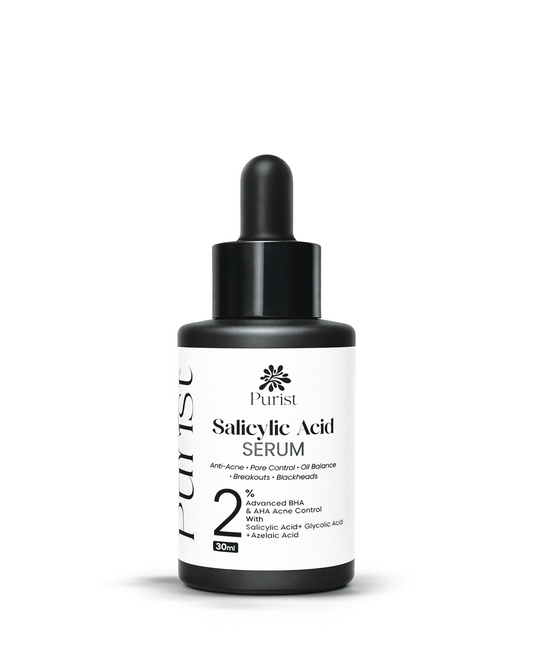
Vitamin C and exfoliating acids (AHA or BHA): Use them at different times of day or on different days, especially when your skin is new to vitamin C.
-
Vitamin C and vitamin E: This pair works well together. The Linus Pauling Institute reports that topical vitamin C combined with vitamin E protects against photodamage better than either vitamin alone.
Want to know what vitamin C actually does once it is on your skin? Read What Does Vitamin C Serum Actually Do for Your Skin?
Common Layering Mistakes
-
Putting sunscreen before moisturizer. Moisturizer goes first. Sunscreen sits on top as the final layer in the morning.
-
Skipping SPF on cloudy or indoor days. Houston Methodist lists a daily sunscreen of SPF 30 or higher as a foundation of any routine, and that means every day, not only on sunny ones.
-
Starting vitamin C, retinol, and an acid in the same week. If your skin reacts, you will not know the cause. Add one new active at a time.
-
Using too much serum. A few drops cover the face. Extra product wastes money and can irritate.
-
Using an oxidized serum. If it turns dark orange, replace it.
Expert tip: Apply thinner products first and thicker ones last, and let each layer settle for 60 to 90 seconds before the next one.
Sample Routine by Skin Type
Here is a simple vitamin c serum morning or night plan for each skin type.
|
Skin Type |
Morning |
Night |
|
Oily or combination |
Cleanser, vitamin C serum, light moisturizer, SPF 30+ |
Cleanser, moisturizer (add retinol a few nights a week once ready) |
|
Dry |
Cleanser, vitamin C serum, rich moisturizer, SPF 30+ |
Cleanser, moisturizer, hydrating treatment |
|
Sensitive |
Cleanser, moisturizer, SPF 30+ (start vitamin C at night every other day) |
Cleanser, vitamin C serum, moisturizer, then move it to mornings once your skin adapts |
|
New to vitamin C |
Use it every morning for 2 weeks, then judge |
Keep nights simple: cleanser and moisturizer |
Houston Methodist notes that most vitamin C products contain 10% to 20% vitamin C, and that people with sensitive skin may do better with a lower strength.
Always patch test. Put an amount of the vitamin C product on my inner forearm. Wait 48 hours before using the vitamin C product on your face.
Which Purist Product Fits Your Routine?
-
New to vitamin C: Start with the Vitamin C Starter Duo.
-
Want to support the seruReady for a daily brightening serum: Try the 10% Vitamin C+ Brightening Serum.
-
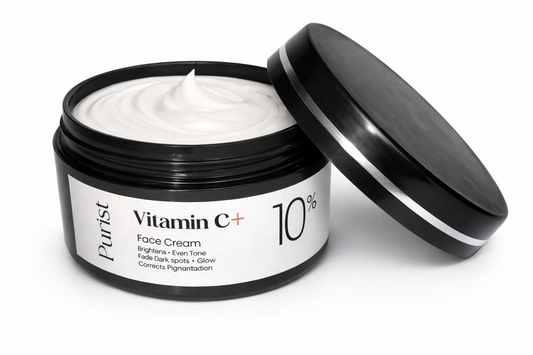
m all day: Add the Purist Vitamin C Glow Cleanser and the Purist Vitamin C+ 10% Brightening Cream.
-
Want the whole system: Choose the Vitamin C Complete Routine.
-
Want to test before committing: Pick the Vitamin C Glow Kit.
See the full Vitamin C guide

Frequently Asked Questions
Should I use vitamin C serum in the morning or at night?
Morning is the best default because vitamin C gives antioxidant support during the day, and sunscreen sits on top. Night also works. Choose the time you can keep up every day.
Can vitamin C be used at night?
Yes. Night use is safe for most people. It helps if you use retinol in the morning or if your mornings feel rushed. If you use retinol at night, keep vitamin C for the morning.
Does vitamin C make skin sun sensitive?
Vitamin C is not known to raise sun sensitivity. It is an antioxidant, not a sunscreen, so you still need SPF 30 or higher every morning.
Can I use vitamin C in both morning and night?
You can, but start with once a day. Add a second use only if your skin stays comfortable for a few weeks.
Do I apply vitamin C before or after moisturizer?
Before. Apply vitamin C to clean skin, then moisturizer, then sunscreen in the morning.
Which Purist product should I use for this?
Beginners should start with the Vitamin C Starter Duo. If your skin already handles actives well, the 10% Vitamin C+ Brightening Serum or the Vitamin C Complete Routine suits you better.
Sources
-
Linus Pauling Institute, Oregon State University: Vitamin C and Skin Health
-
Harvard Health Publishing: Why is topical vitamin C important for skin health?
-
Houston Methodist: Vitamin C Serums: Are They Worth the Hype?
-
American Academy of Dermatology: How to apply sunscreen
-
DermNet: Topical vitamin C
-
Typology: Is vitamin C photosensitizing?
Note: This article is for general information. It does not replace advice from a dermatologist, especially if you have a diagnosed skin condition or use prescription skin care.