











Vitamin C for Skin: The Complete Guide to Brightening & Antioxidant Protection

If you've spent even five minutes looking at skincare in Pakistan, you've seen it: bottles of "Vitamin C Serum" lined up in every pharmacy and on every Instagram page. There's a reason it's everywhere. Vitamin C for skin is one of the most researched, most recommended ingredients in modern skincare — dermatologists have been studying it for decades, and it's still one of the few ingredients that genuinely earns its reputation.
But "genuinely earns its reputation" doesn't mean "works the same for everyone" or "any bottle labelled Vitamin C will do the job." In this guide, we'll break down what vitamin C actually does for your skin, who should (and shouldn't) rush into using it, how to use it correctly so you don't waste money or irritate your skin, and how to build it into a routine that actually shows results.
We've written this in simple, everyday English on purpose — skincare information shouldn't need a dictionary.
What Is Vitamin C?
Vitamin C — also called ascorbic acid — is a vitamin your body needs for many things, including healthy skin, wound healing, and immune function. You already get some of it from food (citrus fruits, guava, bell peppers). But here's the part most people don't know: eating vitamin C does very little for your skin directly. Your skin needs vitamin C applied on top of it — a topical form — to actually benefit your complexion.

That's where vitamin C serums, creams, and cleansers come in.
In skincare products, you'll usually see vitamin C listed under one of these names:
-
L-Ascorbic Acid (LAA) — the purest, most-studied, and most potent form. It works fast but can be less stable and slightly more irritating for sensitive skin.
-
3-O-Ethyl Ascorbic Acid — a newer, more stable derivative. It doesn't oxidise (turn orange/brown) as quickly and tends to be gentler, which is one reason it's become a popular choice in modern formulations.
-
Magnesium Ascorbyl Phosphate / Sodium Ascorbyl Phosphate — gentler derivatives, often used in products made for sensitive or acne-prone skin.
At its core, vitamin C is an antioxidant. That means its main job is to neutralise "free radicals" — unstable molecules created by sun exposure, pollution, and everyday stress on the skin — before they can damage your skin cells and speed up ageing.
Key Benefits of Vitamin C for Skin
According to Harvard Health, topical vitamin C is a dermatologist-favourite ingredient that may help slow early skin ageing, reduce the visible effects of sun damage, and improve the appearance of wrinkles, dark spots, and acne — largely because it works as an antioxidant that fights the free radicals produced by pollution and normal body processes. Here's what that means in practical terms:
1. Brightens Dull, Tired-Looking Skin
Vitamin C works on melanin production — the pigment responsible for dark spots and an uneven skin tone. Clinical studies referenced by Harvard Health found that most participants using topical vitamin C saw visible improvement in dark spots, with very few side effects. This is the single biggest reason people in Pakistan reach for vitamin C — sun exposure here is intense almost year-round, and dark spots/tanning are a common concern.
2. Fights Signs of Premature Ageing
Because vitamin C is an antioxidant, it helps defend skin cells against the daily damage caused by UV rays and pollution — both of which are unavoidable in most Pakistani cities. Harvard Health also points to clinical studies showing that daily use of a vitamin C formulation for at least three months improved the appearance of fine and coarse wrinkles, along with overall skin texture.
3. Supports Collagen Production
Collagen is the protein that keeps skin firm and plump. As we age (and as sun damage builds up), collagen breaks down faster than the body can replace it. Vitamin C plays a direct role in collagen synthesis, which is part of why it's associated with firmer, more youthful-looking skin over time.
4. Boosts Sunscreen Protection (Doesn't Replace It)
This is one of the most misunderstood points. Vitamin C doesn't block UV rays — it isn't a sunscreen. What it does is work alongside sunscreen to reduce the damage caused by the UV rays that do get through. Research shows that combining vitamin C with ingredients like ferulic acid and vitamin E can reduce redness and help protect skin from long-term sun damage. So: vitamin C serum in the morning, sunscreen on top, always.
5. Calms Acne-Related Inflammation
Vitamin C has anti-inflammatory properties that can help manage the redness and oil production linked to acne. Harvard Health notes that in clinical trials, twice-daily application of vitamin C reduced acne lesions compared to a placebo.
Who Should Use It (and Who Should Be Cautious)
Vitamin C is generally considered suitable for most skin types, but "suitable for most" doesn't mean "one strength fits all."
|
Skin Type |
Recommended Approach |
|
Normal skin |
Can generally tolerate a moderate strength serum (around 10–15%) used daily |
|
Oily / combination skin |
Often tolerates higher strengths well and benefits from vitamin C's oil-regulating, anti-inflammatory effect |
|
Dry skin |
Look for formulas paired with hyaluronic acid or ferulic acid to avoid a "tight" feeling |
|
Sensitive / reactive skin |
Start with a lower strength or a gentler derivative (like 3-O-Ethyl Ascorbic Acid) and use it every other day at first |
|
Skin with active eczema, rosacea, or an open wound |
Speak to a dermatologist before adding any new active ingredient |
A general rule dermatologists recommend: 10–20% concentration is the range most formulations sit in, with lower percentages (around 5–10%) suited to beginners and sensitive skin, and higher percentages reserved for those already used to actives. Vitamin C serums also tend to work best at a slightly acidic pH (roughly 3–4), which is what keeps the ingredient stable and able to absorb into skin.
Always patch-test. Apply a small amount of any new vitamin C product to your inner forearm and wait 48 hours before applying it to your face. This is the single easiest way to avoid an unpleasant surprise.
How to Use Vitamin C Correctly
Getting the benefits of vitamin C depends almost entirely on getting the usage right. Here's the order that works:
-
Cleanse your face with a gentle cleanser.
-
Apply vitamin C serum to clean, dry skin — a few drops is enough, focused on the areas with the most sun exposure or dark spots.
-
Follow with a moisturiser to lock it in and prevent dryness.
Finish with sunscreen (morning only) — this step is non-negotiable if you want to actually see results.

Morning vs Night Application
Vitamin C is most commonly recommended for morning use, since its antioxidant action pairs naturally with daytime UV and pollution exposure, and it works well underneath sunscreen. Some people also use a gentler vitamin C product at night as part of a repair-focused routine — this comes down to personal preference and how your skin responds.
Signs You're Using Too Much (or Too Little)
-
Too much, too soon: redness, stinging, peeling, or a tight/uncomfortable feeling shortly after application. If this happens, cut back to every other day, or switch to a lower concentration.
-
Too little to notice a difference: if you've used a low-strength product consistently for 8–10 weeks with zero change, it may be time to move up in concentration or switch to a more stable/potent derivative.
Expected Timeline for Results
Skincare is a slow process, not an overnight fix — and any product promising instant results should be treated with suspicion. Based on the clinical studies referenced above, most visible improvements (in texture, tone, and fine lines) were measured after 3 months of consistent daily use. Some brightening effects on dark spots may become noticeable sooner, but full results take patience and consistency.
Common Mistakes to Avoid
-
Combining too many new actives at once. If you start vitamin C, retinol, and an exfoliating acid all in the same week, and your skin reacts, you won't know which ingredient caused it. Introduce one new active at a time.
-
Storing it wrong. Vitamin C (especially L-Ascorbic Acid) oxidises when exposed to light and air — this is why it can turn a darker yellow/brown colour and lose effectiveness. Keep it in a cool, dark place, and choose products in opaque or airless packaging.
-
Skipping sunscreen. As covered above, vitamin C works with SPF, not instead of it.
-
Expecting overnight results. Give it the full 8–12 weeks before judging whether a product is working for you.
-
Using expired or discoloured serum. If your vitamin C serum has turned a noticeably darker colour or smells different than when you bought it, it has likely oxidised and lost much of its effectiveness.
Vitamin C vs Other Popular Actives
|
Ingredient |
Best Known For |
Can Be Used With Vitamin C? |
|
Retinol |
Cell turnover, anti-ageing |
Yes, but usually at different times of day (vitamin C in the morning, retinol at night) to avoid irritation |
|
Niacinamide |
Oil control, barrier support |
Yes — a widely used, well-tolerated combination |
|
Hyaluronic Acid |
Hydration |
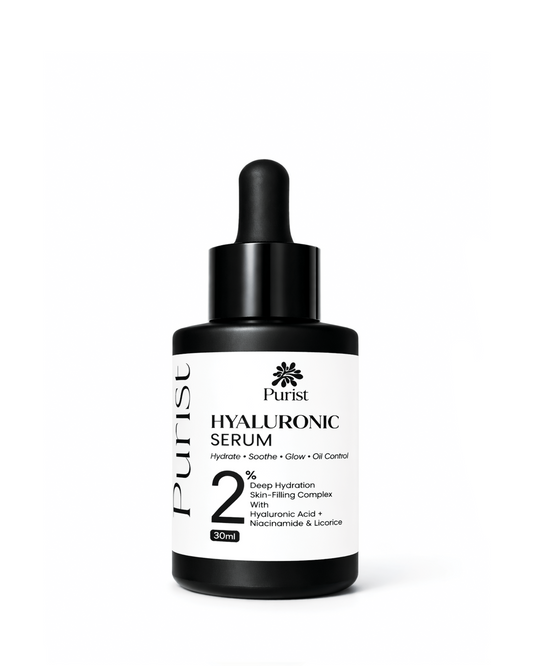
Yes — commonly layered together for hydration + brightening |
|
Exfoliating Acids (AHA/BHA) |
Exfoliation, texture |
Best used at a different time of day or on alternate days to reduce irritation risk |
Building Vitamin C Into Your Routine
If you're new to vitamin C, here's a simple way to start rather than overhauling your entire routine at once:
-
Weeks 1–2: Use a lower-strength vitamin C serum every other morning, followed by moisturiser and sunscreen.
-
Weeks 3–4: If your skin has tolerated it well, move to daily morning use.
-
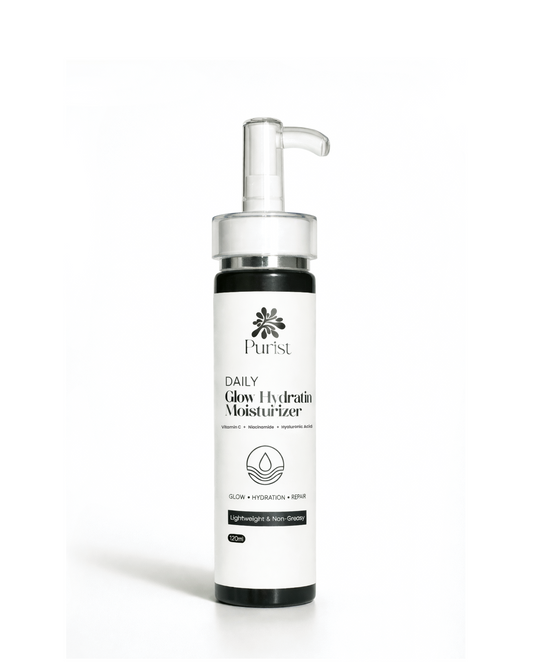
Month 2 onward: If you want brighter results and your skin has adjusted, consider a higher-strength serum or add a vitamin C-infused cleanser or moisturiser to reinforce the effect throughout the day.
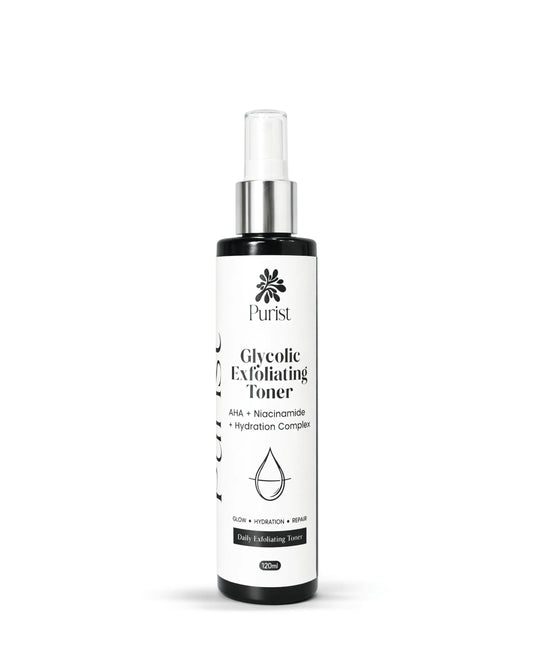
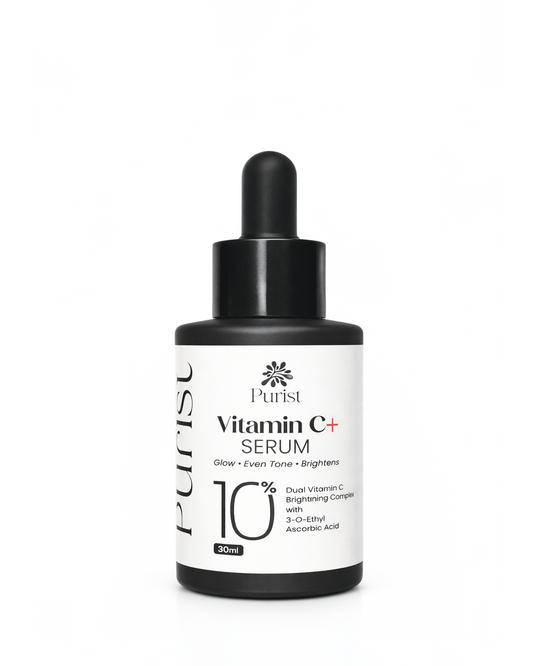
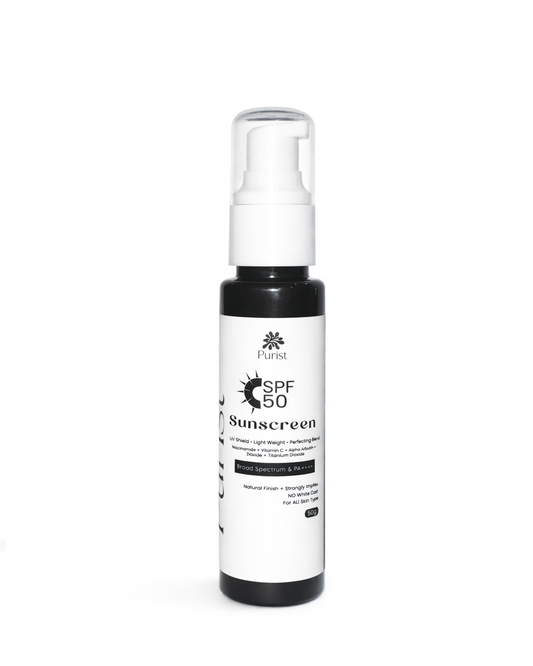
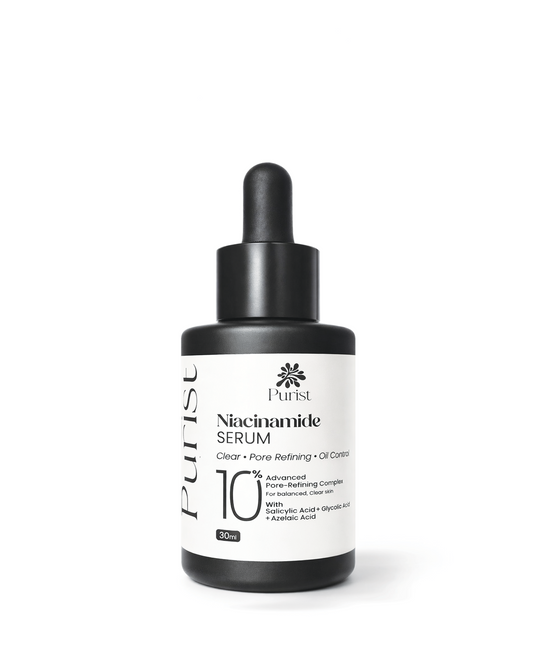
For a complete, dermatologist-informed vitamin C routine, Purist offers a full lineup built around this exact approach:

-
Vitamin C Starter Duo — the easiest way to introduce vitamin C into your routine if you're new to actives.
-
10% Vitamin C+ Brightening Serum — a beginner-to-intermediate strength serum for daily brightening.
-
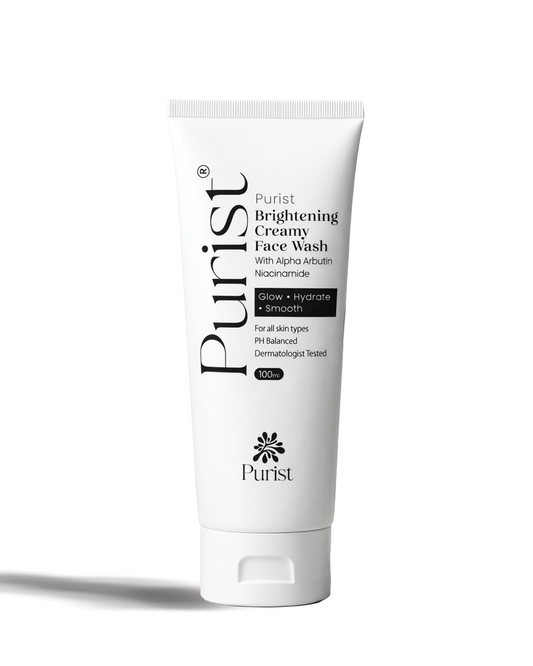
Purist Vitamin C Glow Cleanser — reinforces your serum's brightening effect every time you wash your face.
-
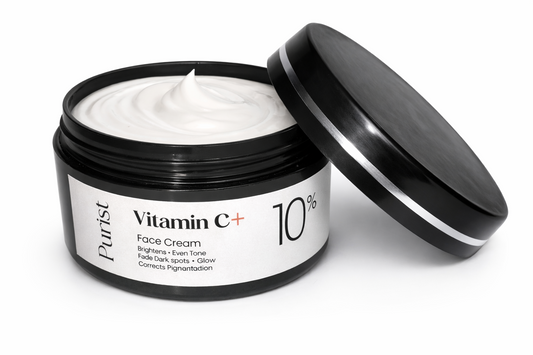
Purist Vitamin C+ 10% Brightening Cream — locks in hydration while continuing to deliver vitamin C throughout the day.
-
Vitamin C Complete Routine — serum, cleanser, and cream bundled together for a full routine.
-
Vitamin C Glow Kit — a starter kit for anyone who wants to try the full experience at a lower commitment.
👉 Shop the full Vitamin C Collection
Frequently Asked Questions
What does vitamin C serum do for skin?
It works as an antioxidant that helps protect skin from daily damage caused by sun and pollution, while also helping to brighten dark spots, even out skin tone, and support collagen production for firmer-looking skin over time.
Is vitamin C serum good for daily use?
For most skin types, yes — daily morning use (followed by sunscreen) is the most common recommendation. Sensitive skin may need to start with every-other-day use.
Which skin types benefit most from vitamin C?
Most skin types can benefit, but oily and normal skin typically tolerate it most easily. Dry and sensitive skin types benefit too, but should choose gentler formulations and lower strengths.
Can I use vitamin C and retinol together?
Yes, but it's generally better to use vitamin C in the morning and retinol at night, to reduce the chance of irritation.
How long does it take to see results from vitamin C?
Most people notice a difference in skin brightness within a few weeks, but the more significant improvements in texture and fine lines seen in clinical studies took around three months of consistent, daily use.
Which Purist product should I use for this?
If you're new to vitamin C, start with the Vitamin C Starter Duo. If you already use actives regularly, the 10% Vitamin C+ Brightening Serum or the Vitamin C Protection Kit are better fits.
Sources:
-
Harvard Health Publishing — Why is topical vitamin C important for skin health?
-
National Library of Medicine (PMC) — Topical Vitamin C and the Skin: Mechanisms of Action and Clinical Application
Note: This article is for general informational purposes and isn't a substitute for advice from a dermatologist, especially if you have a diagnosed skin condition or are currently using prescription skincare.