

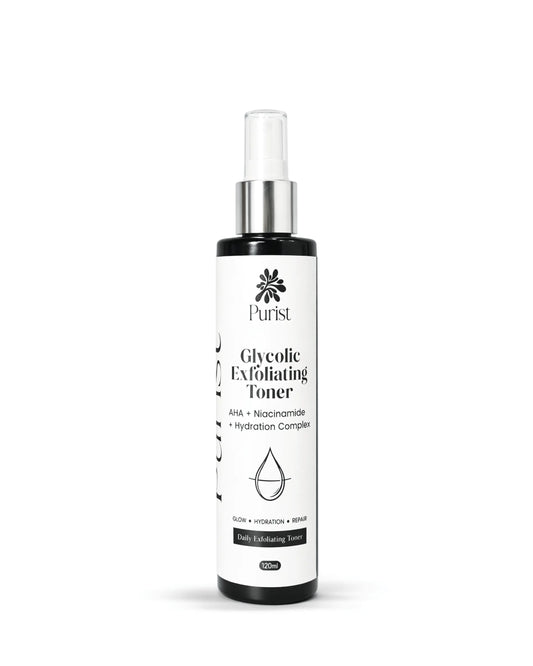

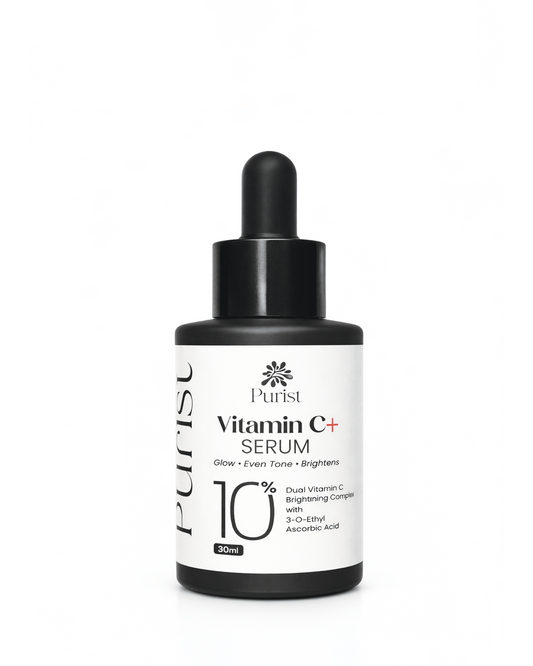

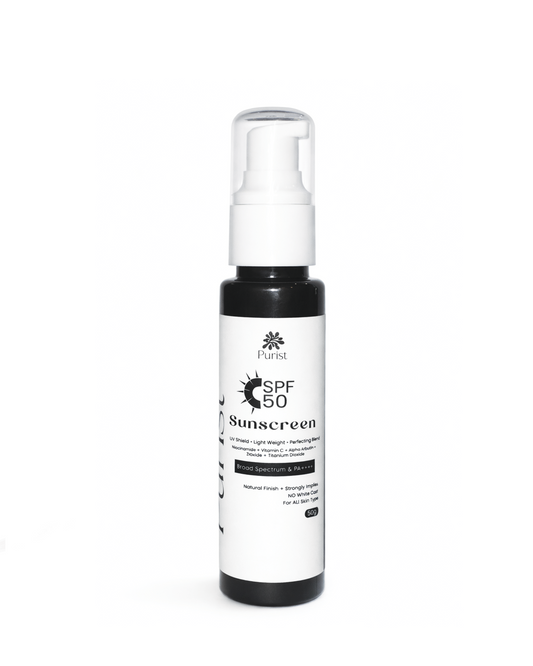

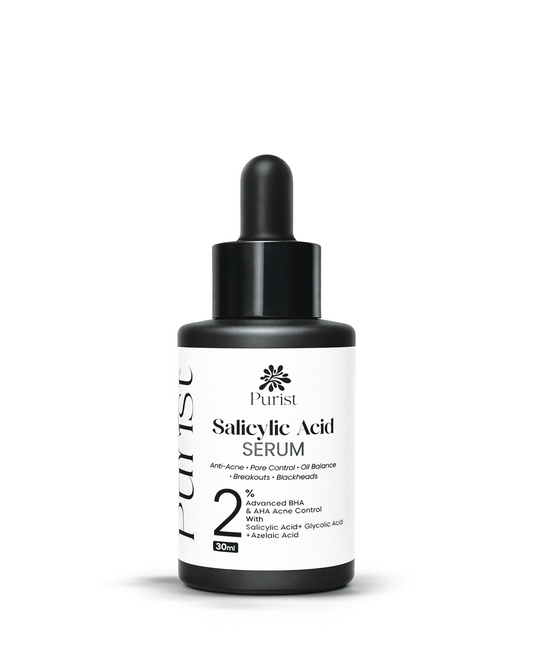







What Does Vitamin C Serum Actually Do for Pakistani Skin?

"Vitamin C is good for your skin" is something almost every skincare page in Pakistan will tell you. What most of them skip is how. What's actually happening when you put a few drops of a vitamin C serum on your face every morning. That's the gap this guide fills.
If you want the full buying and routine guide first, start with our complete Vitamin C for skin guide. This article goes one level deeper: the mechanism, the realistic results, and — just as importantly — what vitamin C serum won't do, no matter how good the bottle looks.
What Vitamin C Actually Does
A vitamin C serum isn't a single-action product. It works on your skin in three separate, measurable ways:
1. It neutralises free radicals. Vitamin C is one of the most studied antioxidants used in skincare. According to Houston Methodist, vitamin C is the most plentiful antioxidant naturally present in skin, which is part of why it's such a well-studied ingredient for protecting against everyday environmental stress — sun exposure, pollution, and general oxidative damage that builds up over time.
2. It slows down pigment production. Dark spots and an uneven tone come from excess melanin, produced by an enzyme called tyrosinase. Vitamin C interferes with this process, which is why consistent use is associated with gradually fading dark marks and a more even skin tone, rather than an instant "bleaching" effect.
3. It supports collagen production. Healthline notes that applying a vitamin C serum may boost collagen production, which can have an overall firming effect on skin over time. Collagen is the structural protein that keeps skin looking plump — it naturally declines with age and sun exposure, which is exactly what vitamin C helps push back against.
The Research in Plain Terms
None of this happens overnight, and none of it is magic — it's chemistry. Vitamin C is a well-studied molecule, and skin absorbs it most effectively in its pure form, ascorbic acid, though newer derivatives like 3-O-Ethyl Ascorbic Acid are formulated to be gentler and more stable while still delivering vitamin C into the skin. The "stability" issue you may have read about — vitamin C serums turning darker/orange over time — isn't a myth. This ingredient is very reactive to light, air and heat, so packaging (opaque bottles, airless pumps) is even more important than almost any other active in skincare.
Who It's Best For
Vitamin C serum is one of the more broadly tolerated actives, but "broadly tolerated" isn't the same as "one-size-fits-all":
-
Dull, tired-looking skin — this is the single most common reason people start using it, and the effect most people notice first.
-
Early sun damage, uneven tone, or post-acne marks — a very common concern in Pakistan given year-round sun exposure.
-
Oily and combination skin — generally tolerates vitamin C well, and may notice an added benefit in reduced inflammation.
-
Sensitive skin — can usually still use it, but should start with a lower concentration (5–10%) or a gentler derivative, and build up frequency slowly.
-
Skin currently dealing with active breakouts, eczema flare-ups, or using prescription treatments — check with a dermatologist before adding a new active, since combining treatments without guidance is a common cause of irritation.
How to Use It Correctly
The serum only does its job if the rest of the routine supports it:
-
Cleanse first, on completely dry skin.
-
Apply a few drops of vitamin C serum — more isn't better here; a thin, even layer is enough.
-
Apply a moisturizer afterwards to lock it in.
-
Apply sunscreen on top every morning — vitamin C works with SPF, not instead of it.

Pairing With Other Actives
A question we get asked often: can vitamin C be combined with other active ingredients?
-
With Niacinamide: generally fine together, and a popular pairing for oil control plus brightening. If you're building a routine around both, see our niacinamide guide for how to sequence the two.
-
With Retinol: most dermatologists recommend using vitamin C in the morning and retinol at night, rather than layering them together, to reduce the chance of irritation.
-
With Exfoliating Acids (AHA/BHA): better used at a different time of day, especially while your skin is still adjusting to vitamin C.
-
In Morning or at Night: Your skin can benefit from a consistent routine, so learn when to apply vitamin C serum, in the morning or at night, to make it easier to incorporate this antioxidant into your daily skincare regimen.
What to Expect (and When)
|
Concern |
Recommended Purist Product |
Expected Timeline |
|
Dullness / lack of radiance |
2–4 weeks for visible brightness |
|
|
Dark spots / uneven tone |
8–12 weeks of consistent use |
|
|
Fine lines / loss of firmness |
8–12+ weeks, with continued improvement over months |
|
|
Daily maintenance / prevention |
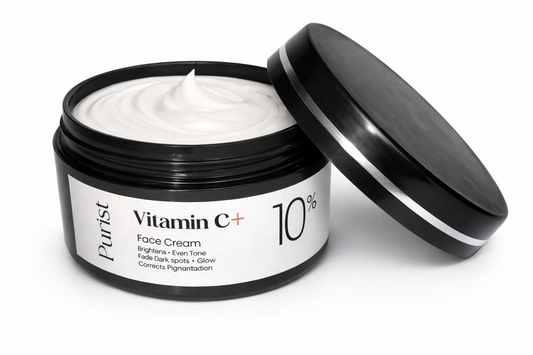
Purist Vitamin C Glow Cleanser + Purist Vitamin C+ 10% Brightening Cream |
Ongoing — cumulative benefit with consistent use |
|
New to actives, want to try the full system |
4–8 weeks to judge fit, 8–12 weeks for full results |

Expert tip: Consistency matters more than concentration. A lower-strength vitamin C serum used every single day will typically outperform a high-strength serum used inconsistently — skin responds to repeated, steady exposure, not occasional high doses.
What It Won't Do
This is the part most product pages leave out, and it's exactly why so many people feel let down by vitamin C:
-
It won't replace sunscreen. It reduces some UV-related damage when paired with SPF, but it isn't a sunscreen substitute.
-
It won't erase deep, long-standing wrinkles. It can soften the appearance of fine lines and support firmness, but it isn't a treatment for deep-set wrinkles the way a clinical procedure would be.
-
It won't "bleach" skin instantly. Pigment fading from vitamin C is gradual, tied to slowing new pigment formation — not an instant lightening effect.
-
It won't work the same for everyone at the same speed. Skin tone, sun exposure history, and product strength all affect how fast results show.
Knowing what a product won’t do is as useful as knowing what it will do. It’s what separates a routine you stick with from one you abandon after two weeks because you expected the wrong thing.
Frequently Asked Questions
Does Vitamin C brighten skin?
Yes — by slowing excess pigment production and supporting an antioxidant effect against environmental damage, vitamin C is associated with a visibly brighter, more even-toned complexion with consistent use.
How long until results show?
Early brightness is often noticeable within 2–4 weeks. More significant changes to tone and texture typically take 8–12 weeks of consistent daily use.
Which Purist product should I use for this?
If you're new to vitamin C, the Vitamin C Starter Duo is the easiest entry point. If you already use actives and want faster brightening, the 10% Vitamin C+ Brightening Serum or full Vitamin C Complete Routine are better suited.
Is vitamin C serum the same as a vitamin C moisturiser or cleanser?
No — a serum delivers the highest concentration directly to skin and is the most effective single product, while a vitamin C cleanser or moisturiser reinforces the effect but shouldn't replace the serum in a results-focused routine.
For the complete routine, product-by-product breakdown, and safety guidance (patch testing, who should be cautious, and how to build vitamin C into a full skincare routine), see our complete Vitamin C guide.
Sources:
-
Houston Methodist — Vitamin C Serums: Are They Worth the Hype?
-
Healthline — 11 Vitamin C Serum Benefits and How to Use
-
Harvard Health Publishing — Why is topical vitamin C important for skin health?
Note: This article is for general informational purposes and isn't a substitute for advice from a dermatologist, especially if you have a diagnosed skin condition or are currently using prescription skincare.